


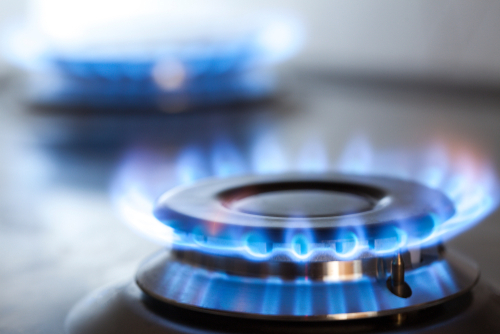
 Most homeowners flip on a gas stove or gas fireplace without ever wondering where that fuel actually comes from.
But if you’re considering propane for your Southeastern North Carolina home, it helps to understand what you’re bringing into your house and why propane is such a popular energy choice.
Propane is a colorless, odorless gas that belongs to a family of fuels called liquefied petroleum gases, or LPG. Suppliers add a distinct odorant, often compared to rotten eggs or a skunk’s spray, so leaks are easier to detect.
Once compressed, propane turns into a liquid, which makes it easy to store and transport in tanks. That liquid converts back to gas when it is released from the tank, ready to fuel your furnace, water heater, or backyard grill.
Propane’s story begins in 1910, when chemist Dr. Walter O. Snelling discovered that gasoline stored in an open container evaporated into gas.
Curious, he identified that certain compounds within that gasoline, propane among them, could be captured and compressed into liquid form. By 1912, Snelling had developed a practical way to store this liquefied gas, and commercial propane sales began shortly after.
That discovery helped launch the modern propane industry, and more than a century later, propane continues to provide heat, hot water, cooking fuel, and other energy needs for homes across the country.
Propane is primarily produced through two processes:
Once separated, propane is stored under pressure as a liquid, tested for quality, and transported by pipeline, rail, or truck to storage facilities.
From there, local propane companies like Parker Gas distribute it directly to homes and businesses across Fayetteville and the surrounding region.
Much of the propane used in the United States is produced domestically, giving homeowners access to a fuel supply that is supported by North American energy production.
A strong domestic supply can help support reliable access to propane for residential, commercial, agricultural, and industrial customers.
Propane also burns cleaner than some other conventional fuels, producing relatively low levels of particulate matter and sulfur emissions. For homeowners interested in balancing performance, reliability, and environmental considerations, propane can be a practical option.
Fayetteville homeowners rely on propane for more than just heating. It can power water heaters, generators, fireplaces, clothes dryers, ranges, and outdoor kitchens.
Propane is also useful when reliable backup power matters. Severe weather can knock out electricity across Southeastern North Carolina, and a propane-powered standby generator can help keep essential systems running during an outage.
Parker Gas serves Fayetteville and nearby communities with dependable propane delivery and propane appliance services, helping local homeowners keep their homes comfortable and running smoothly year-round.
Understanding where propane comes from can give you greater confidence in the fuel powering your home. It is a versatile, widely available energy source with a long history of residential and commercial use.
If you’re a Fayetteville-area homeowner weighing your energy options, reach out to Parker Gas to learn how propane delivery and appliance services can support your home’s comfort and energy needs.
Choose which optional categories this site may use. Necessary cookies stay enabled so core functionality can continue to work. Review our Privacy Policy and Cookie Policy for more detail.
Required for core website functionality, security, forms, login, and similar essential behavior.
Enables enhanced features such as embedded videos, maps, chat tools, and other third-party content.
Helps measure site traffic and performance.
Used for advertising, remarketing, conversion tracking, and campaign measurement.